
The Flock Learns What Justice Requires
Three Bags FullThe sheep’s cry for justice evolves from retaliation into attention, testimony, and a shared effort to make truth public.
increasing Bearing strength in each event
 decreasing
Bearing strength in each eventdecreasingJustice as a Cry
Justice as a Cry
A simple demand
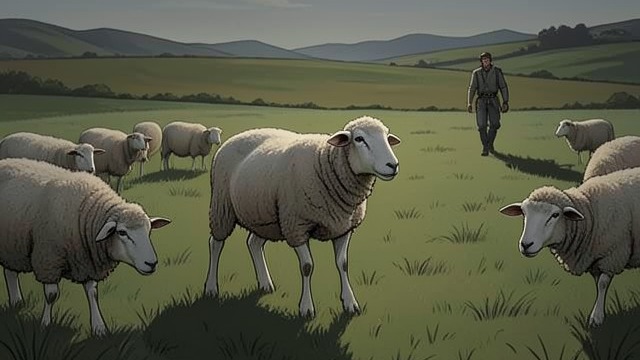
Othello calls for justice after George Glenn’s death, and the flock repeats the word. At first, justice means finding the person responsible and answering the harm.
A question opens
The sheep do not know what justice involves or what they could do with it. Their uncertainty keeps the word alive as a question rather than a settled principle.
The Meaning of Justice
The Meaning of Justice
Othello’s definition
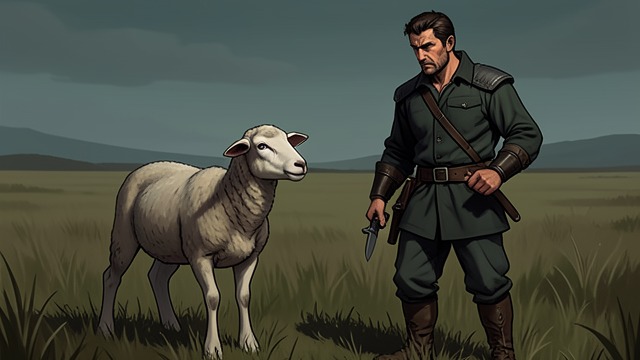
Othello describes justice as the ability to move and graze freely without having one’s way stolen. He draws on a life shaped by human control and animal violence.
A challenge from a lamb
The Winter Lamb asks whether George might have taken someone else’s way. The question prevents the flock from treating every conflict as a simple contest between innocent victim and guilty enemy.
Fear and Attention
Fear and Attention
Learning to notice
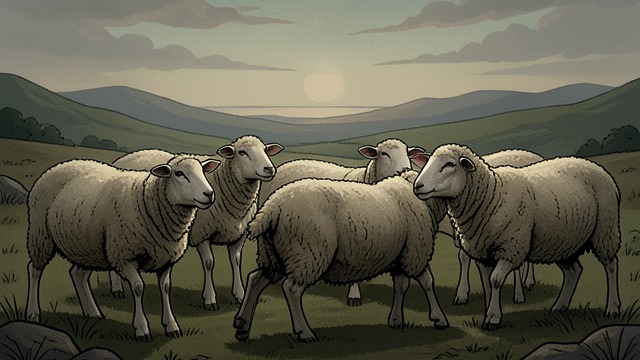
Melmoth teaches the flock that attention can limit the power of fear. The sheep practice watching their surroundings and resisting the instinct to run together.
Responsibility rather than revenge
The lessons help them defend the pasture and expose danger without attacking every suspected human. Justice begins to require self-command as well as courage.
An Attempt to Be Heard
An Attempt to Be Heard
A public performance
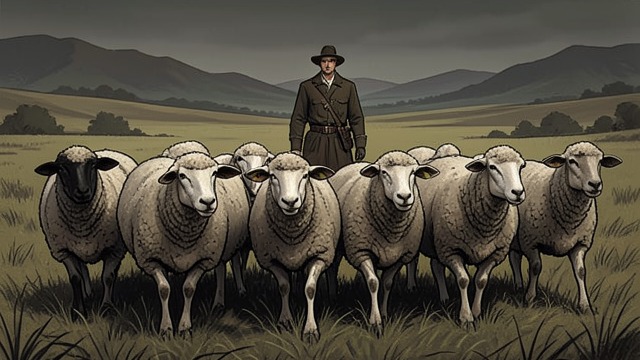
The flock stages George’s death at the contest because human spectators are finally watching. Their clumsy symbols are an attempt to translate sheep knowledge into human attention.
The limits of spectacle
The audience initially mistakes the event for entertainment. The sheep learn that being seen is not the same as being understood, and that testimony may be needed alongside performance.
Truth Without Retaliation
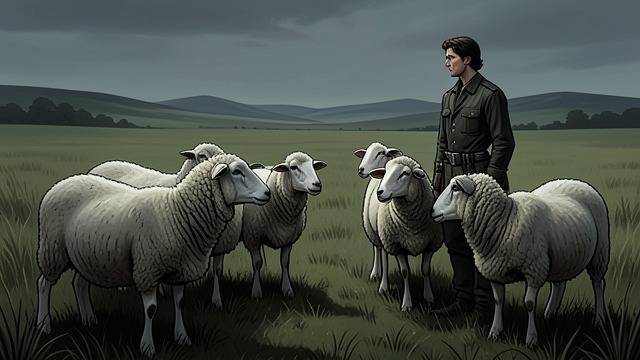
Truth Without Retaliation
No attack on Beth
The flock had considered killing or frightening Beth, but her public admission changes the situation. Their demand shifts toward making the truth known rather than taking revenge.
An imperfect resolution
The sheep learn that disclosure can matter even when the human reasons remain incomprehensible. Justice is not a complete explanation, but it is no longer only a cry for punishment.
Immediately after the flock names the death a murder
During the conversation with The Winter Lamb
During Melmoth’s lessons after the meat-breed warning
During the Smartest Sheep contest
After Beth’s confession
